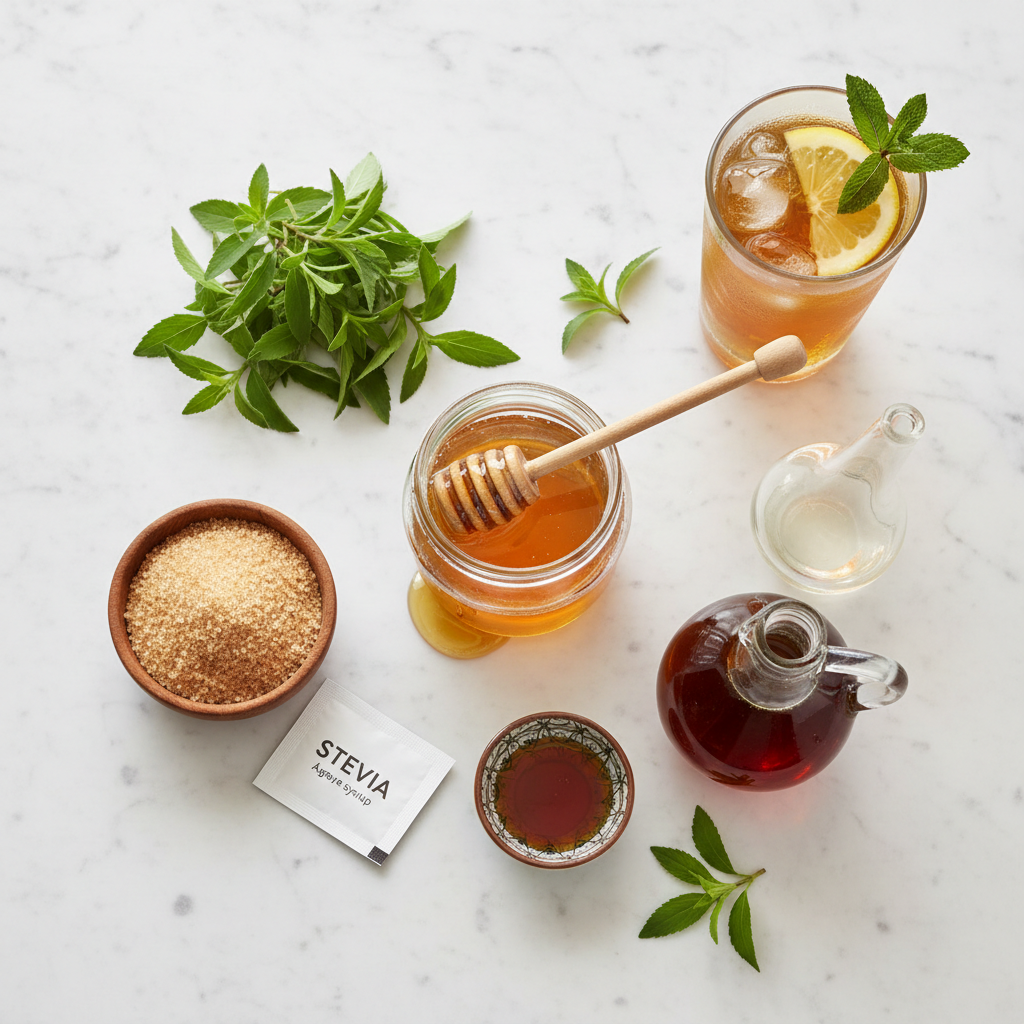
Getting the sweetness right is the difference between good iced tea and great iced tea. But sweetening cold beverages is trickier than it sounds — granulated sugar barely dissolves in cold liquid, and different sweeteners bring very different flavour profiles to the glass.
Here is every sweetening method ranked, from best to worst, with tips on how to use each one.
1. Simple Syrup — The Gold Standard
Best for: All iced teas, especially when making large batches
Simple syrup is the professional's choice for a reason: it dissolves instantly in cold liquid, distributes evenly through the pitcher, and has a clean, neutral sweetness that lets the tea flavour shine.
How to make it:
Combine equal parts sugar and water in a small saucepan (1 cup sugar + 1 cup water is a good starting batch). Heat over medium, stirring until the sugar fully dissolves — about 3 minutes. Do not boil. Cool completely before using.
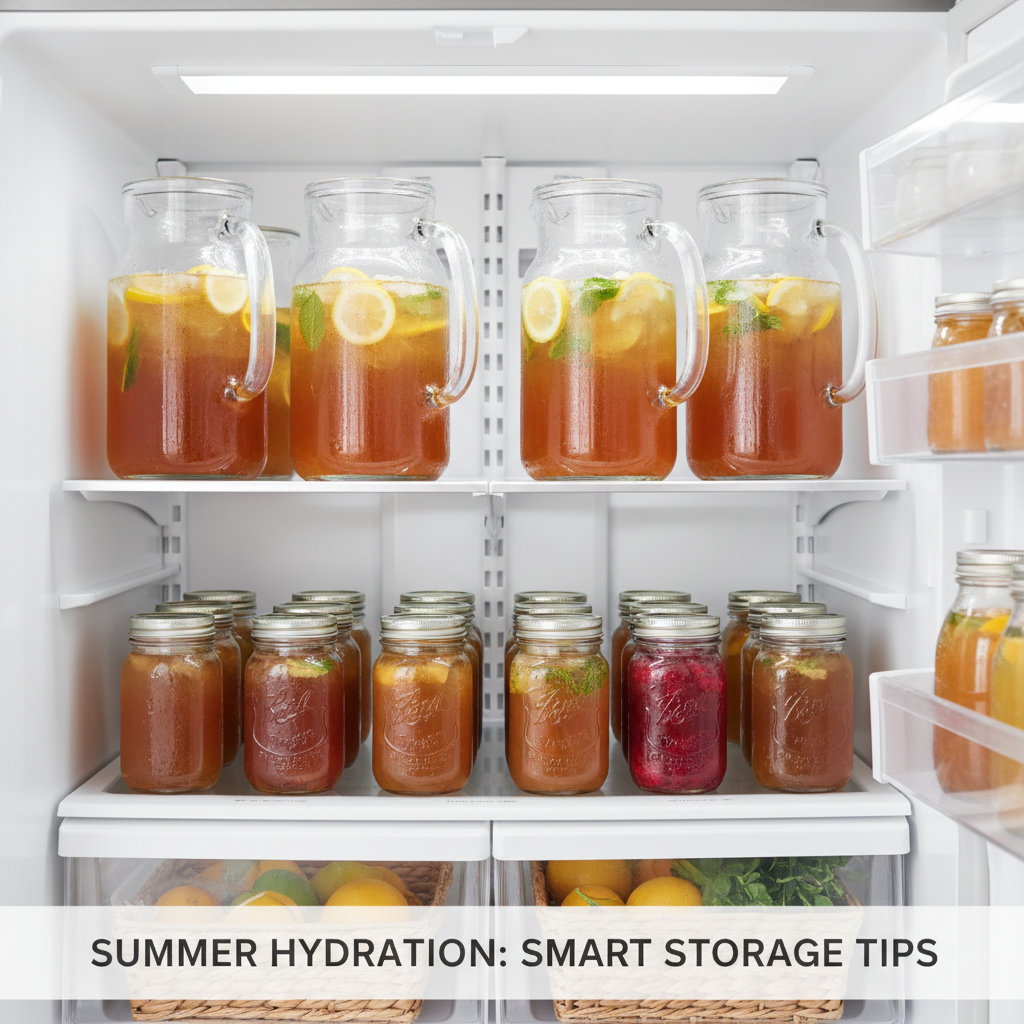
Simple syrup keeps in the refrigerator for up to 4 weeks in a sealed jar.
How much to use: Start with 2–3 tablespoons per litre of iced tea and adjust to taste.
Pro tip: Make flavoured simple syrups by adding herbs or fruit during the heating process. Mint simple syrup, lavender simple syrup, and ginger simple syrup all make excellent additions to iced tea.
2. Honey — The Flavour Enhancer
Best for: Green tea, herbal teas, chamomile, jasmine
Honey adds sweetness plus a subtle floral complexity that pairs beautifully with delicate teas. Raw honey in particular brings nuanced flavour notes that plain sugar simply cannot match.
The challenge: Honey does not dissolve well in cold liquid. You need to either:
- Stir it into hot tea before chilling, or
- Make a honey simple syrup (equal parts honey and warm water, stirred until combined)
Flavour pairings: Wildflower honey with chamomile, clover honey with black tea, buckwheat honey with robust herbal blends.
How much to use: Honey is slightly sweeter than sugar, so use about 25% less. Start with 1.5 tablespoons per litre.
3. Agave Nectar — The Cold-Dissolving Option
Best for: Cold brew teas, when you want to sweeten without heating
Agave nectar has a lower glycemic index than sugar and — crucially — dissolves easily in cold liquid. This makes it uniquely useful for sweetening cold brew iced tea without having to make a separate syrup.
The flavour is mild and slightly fruity, which works well with most iced teas without overpowering them.
How much to use: Agave is about 1.5 times sweeter than sugar, so use less. Start with 1 tablespoon per litre.
4. Granulated Sugar — The Classic (With a Catch)
Best for: Sweetening hot tea before chilling
Plain white sugar is the most common iced tea sweetener, and it works perfectly — as long as you add it while the tea is still hot. Stir it in immediately after removing the tea bags, before adding cold water or ice.
The problem: If you try to add granulated sugar to cold iced tea, it sinks to the bottom and barely dissolves, leaving you with a gritty, unevenly sweetened drink.
How much to use: 2–4 tablespoons per litre, depending on preference.
Brown sugar alternative: Raw or brown sugar adds a subtle molasses note that pairs well with bold black teas and chai-spiced blends.
5. Stevia — The Zero-Calorie Option
Best for: Calorie-conscious drinkers, diabetics, those reducing sugar intake
Stevia is a natural, plant-derived sweetener with zero calories and zero glycemic impact. It dissolves reasonably well in cold liquid, making it practical for iced tea.
The challenge: Stevia has a distinctive aftertaste that some people find unpleasant — often described as slightly bitter or liquorice-like. The quality varies significantly between brands. Liquid stevia tends to have a cleaner taste than powdered stevia.
How much to use: Stevia is 200–300 times sweeter than sugar. A few drops of liquid stevia or a tiny pinch of powder goes a long way. Start with less than you think you need.
Best teas for stevia: Strong flavours like hibiscus, berry blends, and robust black teas mask stevia's aftertaste better than delicate green or white teas.
6. Monk Fruit Sweetener — The Premium Zero-Calorie Option
Best for: Those who find stevia's aftertaste unpleasant
Monk fruit sweetener is extracted from the monk fruit (luo han guo) and has zero calories and zero glycemic impact, like stevia. Many people find it has a cleaner, more sugar-like taste with less aftertaste.
It is significantly more expensive than stevia and harder to find, but worth it if you want a zero-calorie sweetener without compromise.
How much to use: Follow the package instructions — monk fruit sweeteners vary in concentration depending on the brand.
7. Maple Syrup — The Canadian Option
Best for: Autumn-inspired blends, chai, spiced teas
Maple syrup brings a warm, caramel-like sweetness that pairs beautifully with spiced and autumnal iced teas. It dissolves reasonably well in cold liquid and adds a distinctly Canadian character.
It is not the right choice for delicate teas — the maple flavour will overpower chamomile or jasmine. But in a spiced black tea or apple-cinnamon herbal blend, it is exceptional.
How much to use: Similar sweetness to honey. Start with 1.5 tablespoons per litre.
8. Artificial Sweeteners — Avoid If Possible
Best for: Nothing, really
Aspartame, sucralose, and saccharin all work technically — they dissolve in cold liquid and add sweetness. But they bring artificial aftertastes that clash with the natural flavours of good tea, and the health research on artificial sweeteners is increasingly mixed.
If you need a zero-calorie option, stevia or monk fruit are better choices in every respect.
The Sweetness Scale: How Much to Use
Here is a quick reference for sweetening a standard 1-litre pitcher of iced tea:
| Sweetener | Amount per Litre |
|---|---|
| Simple syrup | 2–4 tbsp |
| Granulated sugar (hot tea) | 2–4 tbsp |
| Honey | 1.5–3 tbsp |
| Agave nectar | 1–2 tbsp |
| Maple syrup | 1.5–3 tbsp |
| Liquid stevia | 4–8 drops |
These are starting points — adjust to your taste. The best iced tea is the one sweetened exactly the way you like it.
The Unsweetened Option
Worth mentioning: cold-brewed iced tea is naturally smooth and mellow enough that many people enjoy it completely unsweetened. If you have never tried unsweetened iced tea, cold brew is the best introduction — it lacks the bitterness that makes hot-brewed unsweetened tea an acquired taste.
Try your next batch without any sweetener. You might be surprised.
Explore Topics
Written by
Steep & Chill
Content creator and writer sharing insights and stories.