Green tea iced tea has a reputation problem. Most people's experience with it is a bitter, astringent glass of something that tastes like lawn clippings — the result of brewing green tea the same way you'd brew black tea and then pouring it over ice. Done correctly, green tea iced tea is one of the most complex, refreshing, and genuinely delicious drinks you can make at home.
The difference between bad green tea iced tea and excellent green tea iced tea comes down to a few key variables. Here is everything you need to know.
Why Green Tea Is Different
Green tea is made from the same plant as black tea (Camellia sinensis), but it's processed differently. Where black tea is fully oxidised, green tea is minimally processed — the leaves are heated quickly after picking to prevent oxidation, preserving their green colour and delicate flavour compounds.
This minimal processing makes green tea more delicate and more sensitive to brewing conditions than black tea. The same variables that barely affect black tea — water temperature, steep time, water quality — can dramatically affect green tea.
The bitterness problem: Green tea contains catechins (a type of polyphenol) and caffeine, both of which are bitter. At high temperatures, these compounds extract rapidly and in large quantities, producing a harsh, bitter cup. At lower temperatures, they extract more slowly and in smaller quantities, producing a smooth, sweet, complex cup.
This is why temperature control is the single most important variable in green tea brewing.
The Best Green Tea Varieties for Iced Tea
Not all green teas are equal for iced tea. Here are the varieties that work best:
Sencha
The most widely available Japanese green tea. Sencha has a grassy, slightly sweet flavour with a clean, refreshing finish. It's the most versatile green tea for iced tea — good for both hot-brew-then-chill and cold brew methods.
Flavour profile: Grassy, vegetal, slightly sweet, clean finish. Best for: Everyday green tea iced tea, green tea lemonade, green tea with mint.
Gyokuro
The most prized Japanese green tea. Gyokuro is shade-grown for 3–4 weeks before harvest, which dramatically increases L-theanine content and produces an intensely umami, sweet, complex flavour. It's expensive but extraordinary.
Flavour profile: Deep umami, sweet, complex, almost oceanic. Best for: Cold brew (the cold extraction emphasises its sweetness and umami), drinking straight over ice.
Genmaicha
Green tea blended with roasted brown rice. The rice adds a nutty, toasty note that makes genmaicha more approachable and less bitter than pure green tea.
Flavour profile: Nutty, toasty, grassy, approachable. Best for: Iced tea for people who find pure green tea too grassy, pairing with food.
Hojicha
Roasted green tea. The roasting process reduces caffeine and catechins, producing a warm, nutty, caramel-like flavour with minimal bitterness. Technically a green tea but tastes quite different.
Flavour profile: Roasted, nutty, caramel, low bitterness. Best for: Iced lattes, cold brew, people who want a caffeine-reduced option.
Jasmine Green Tea
Green tea scented with jasmine flowers. The jasmine adds a floral, perfumed note that makes it one of the most popular green teas for iced tea.
Flavour profile: Floral, jasmine, grassy base. Best for: Iced tea, cold brew, pairing with light desserts.
Gunpowder Green Tea
Chinese green tea rolled into small pellets. More robust than Japanese green teas, with a slightly smoky, bold flavour.
Flavour profile: Bold, slightly smoky, robust. Best for: Green tea lemonade, mint green tea (Moroccan-style), drinks where you want a stronger green tea flavour.
Method 1: Hot Brew, Then Chill
This is the most common method and the one most people get wrong.
Temperature: The Critical Variable
Never use boiling water for green tea. Boiling water (100°C) extracts catechins and caffeine aggressively, producing a bitter, harsh cup. Green tea should be brewed at 70–80°C (160–175°F).
How to achieve the right temperature:
- Use a temperature-controlled kettle (the most reliable method)
- Boil water and let it cool for 3–5 minutes (drops approximately 10°C per minute)
- Add a small amount of cold water to boiling water (roughly 1 part cold to 4 parts boiling)
Steep Time
2–3 minutes maximum. Green tea extracts quickly at even moderate temperatures. Over-steeping is the second most common cause of bitter green tea iced tea.
Set a timer. Don't guess.
The Iced Tea Problem
Pouring hot green tea directly over ice dilutes it significantly. The solution is to brew a concentrate:
Concentrate method:
- Use half the water you'd normally use (e.g., 500ml instead of 1 litre)
- Brew at 75°C for 2–3 minutes
- Pour immediately over a full glass or pitcher of ice
- The ice chills the tea rapidly and the melting ice dilutes it to the correct strength
This "Japanese iced tea" method produces a bright, clear, flavourful result that's quite different from tea that's been brewed hot and then slowly chilled.
Ratios for Hot Brew
Loose leaf: 5–6 grams per 500ml (for concentrate method) Tea bags: 3–4 bags per 500ml (for concentrate method)
Method 2: Cold Brew
Cold brew is the most forgiving method for green tea and often produces the best results. The cold water extracts L-theanine and sweetness efficiently while minimising the extraction of bitter catechins.
Cold Brew Ratios
Loose leaf: 10–12 grams per litre Tea bags: 5–6 bags per litre Steep time: 6–10 hours in the refrigerator
Cold Brew Tips for Green Tea
Don't over-steep. Even cold brew green tea can become bitter if left too long. 8 hours is the sweet spot for most green teas; gyokuro can be done in 6 hours.
Use filtered water. Green tea is particularly sensitive to water quality. Hard water or chlorinated water will significantly affect the flavour.
Taste before straining. After 6 hours, taste the cold brew. If it's at the right strength, strain it. If it needs more time, check again at 8 hours.
Refrigerate immediately after straining. Cold brew green tea oxidises relatively quickly. Consume within 3 days for best flavour.
Flavour Combinations
Green tea's clean, grassy flavour pairs well with a wide range of additions:
Citrus: Lemon, lime, and yuzu all complement green tea beautifully. Green tea lemonade is one of the most popular iced tea combinations for good reason.
Mint: Fresh mint and green tea is a classic combination. Add fresh mint leaves to cold brew during steeping, or muddle mint with simple syrup and add to brewed green tea.
Ginger: Fresh ginger adds warmth and brightness. Add sliced ginger to cold brew or make a ginger simple syrup.
Cucumber: Cucumber and green tea is a refreshing, spa-like combination. Add cucumber slices to cold brew or serve with cucumber garnish.
Honey: Honey's floral sweetness complements green tea better than plain sugar. Use honey simple syrup for easy mixing in cold drinks.
Coconut water: Replacing some of the water with coconut water adds a subtle tropical sweetness and electrolytes.
Sparkling water: Adding sparkling water to cold brew green tea creates a light, effervescent drink that's particularly refreshing.
Common Mistakes and How to Fix Them
Bitter tea: Almost always caused by water that's too hot or steeping too long. Reduce temperature to 75°C and steep for no more than 2–3 minutes.
Weak, watery tea: Increase the ratio (more tea per litre of water) or extend the cold brew time. Also check that your tea is fresh — old tea produces weak, flat results.
Cloudy tea: Usually caused by hard water or rapid chilling. Use filtered water and chill gradually rather than pouring hot tea directly over ice (unless using the concentrate method, where rapid chilling is intentional).
Flat, lifeless flavour: Your tea may be stale. Green tea oxidises relatively quickly — buy in small quantities and use within 3–6 months of purchase. Store in an airtight container away from light and heat.
Caffeine in Green Tea Iced Tea
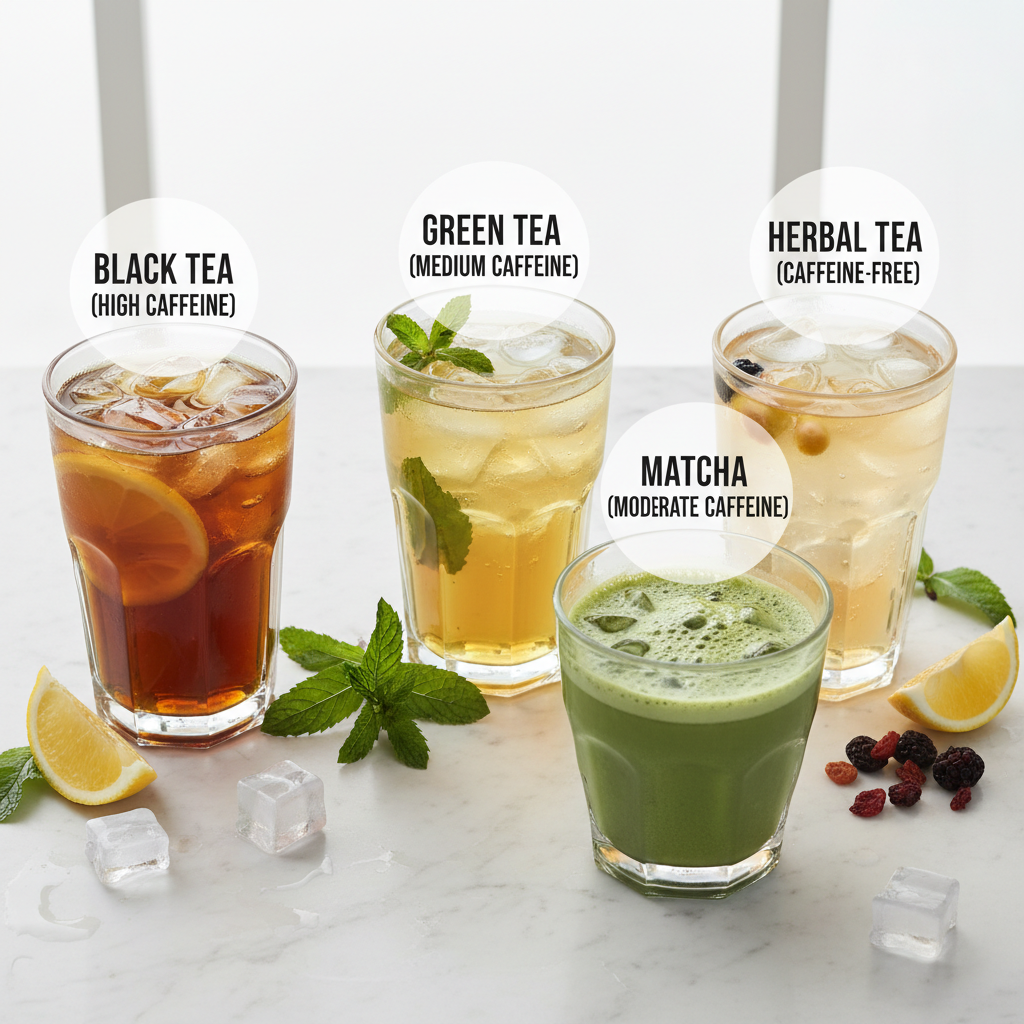
Green tea contains less caffeine than black tea but more than most people assume. A 250ml glass of green tea iced tea contains approximately 20–35mg of caffeine, compared to 25–50mg for black tea.
Cold brew green tea typically has slightly less caffeine than hot-brewed green tea, because cold water extracts caffeine less efficiently than hot water.
For a caffeine-free option, hojicha (roasted green tea) has significantly reduced caffeine due to the roasting process. Herbal teas are completely caffeine-free.
The Bottom Line
Green tea iced tea is one of the most rewarding drinks to make at home — but it requires more care than black tea. The two most important rules are: never use boiling water, and don't over-steep.
Cold brew is the most forgiving method and often produces the best results. If you've been disappointed by bitter green tea iced tea in the past, try cold brewing — the difference is dramatic.
Start with sencha for everyday use, try gyokuro cold brew when you want something exceptional, and explore jasmine and genmaicha for variety. Once you've tasted well-made green tea iced tea, the bitter, astringent version you've been tolerating will never seem acceptable again.
Explore Topics
Written by
Steep & Chill
Content creator and writer sharing insights and stories.