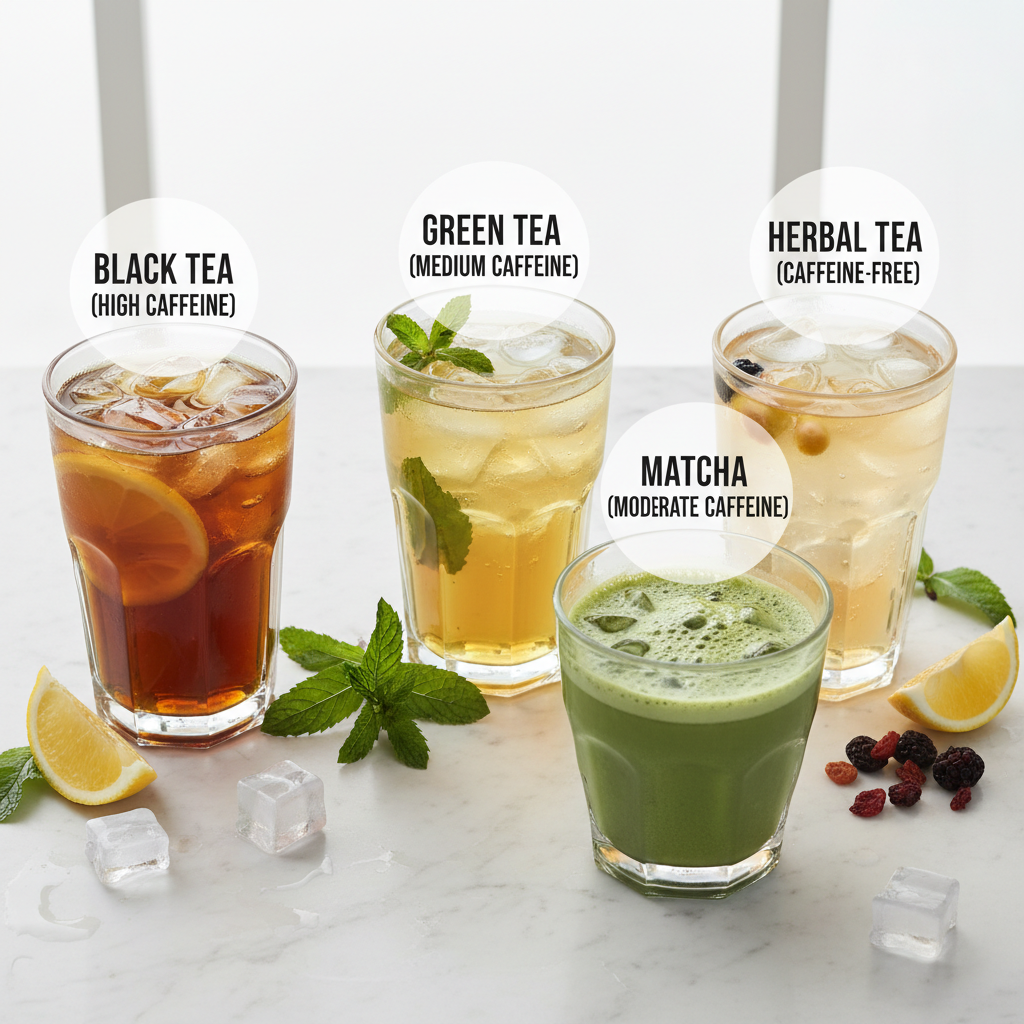
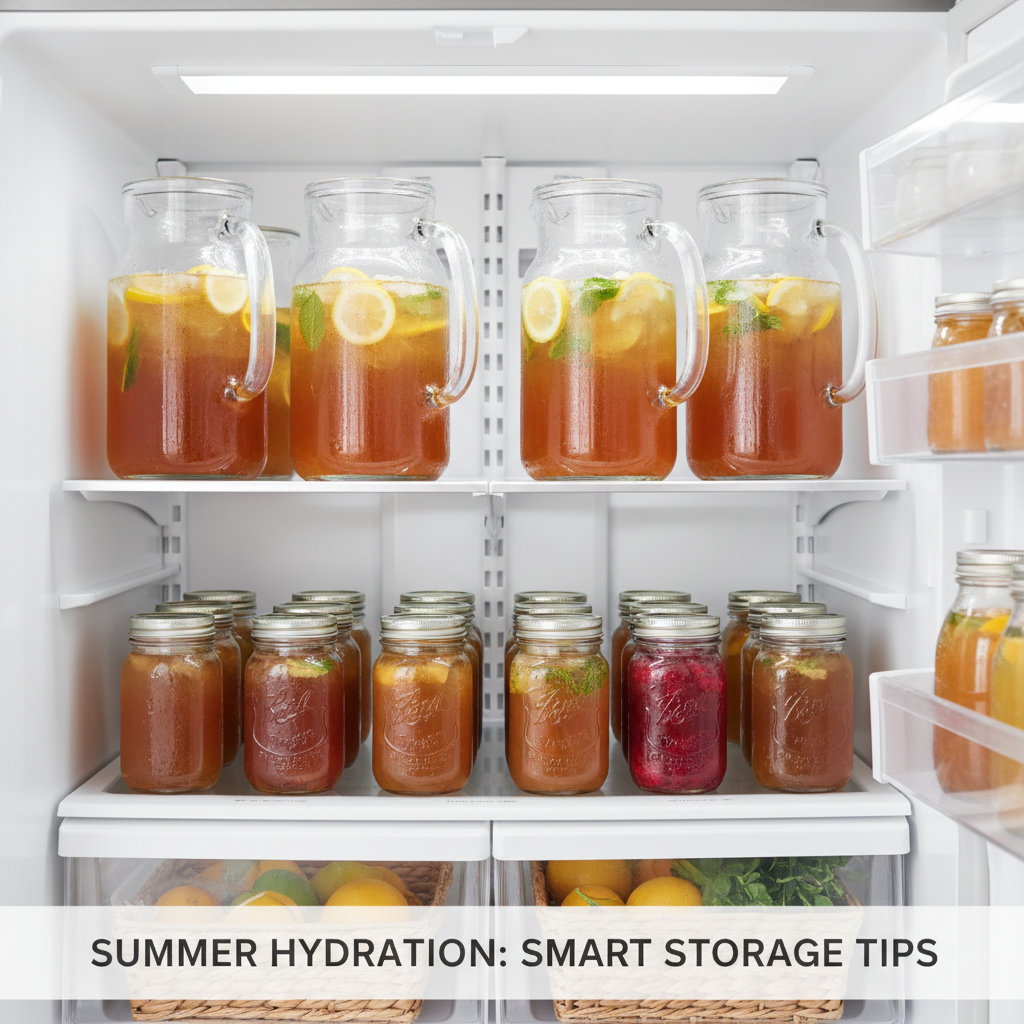
A good pitcher is the most-used piece of equipment in any iced tea kitchen. It's where your tea lives, how you serve it, and often how you brew it. The right pitcher makes the whole process easier; the wrong one creates frustration every time you use it.
Here is a practical guide to choosing the right pitcher for how you actually make iced tea.
The Main Types
Standard Glass Pitcher
The classic choice. A glass pitcher shows off the colour of your tea, doesn't absorb flavours or odours, and is easy to clean. It's the most versatile option for general iced tea use.
Pros: Beautiful presentation, flavour-neutral, easy to clean, dishwasher-safe (most), durable if handled carefully.
Cons: Heavy, breakable, not insulated (tea warms up quickly at room temperature).
Best for: Everyday iced tea, sweet tea, serving at the table, any tea where colour is part of the appeal (hibiscus, butterfly pea flower, matcha lemonade).
What to look for: Borosilicate glass is more heat-resistant and durable than standard glass — important if you're pouring hot tea concentrate into the pitcher. A wide mouth makes it easier to add ice and clean. A tight-fitting lid prevents fridge odours from affecting the tea.
Plastic Pitcher
Lightweight and shatterproof, plastic pitchers are practical for outdoor use, families with children, and anyone who has broken one too many glass pitchers.
Pros: Lightweight, shatterproof, inexpensive, often comes with a lid.
Cons: Can absorb flavours and odours over time (especially from strongly flavoured teas like hibiscus or chai), may stain, not suitable for hot liquids (most), environmental concerns.
Best for: Outdoor entertaining, picnics, households with children, casual everyday use.
What to look for: BPA-free materials. Tritan plastic is the best option — it's crystal clear, shatterproof, and more resistant to staining and odour absorption than standard plastic. Avoid cheap polycarbonate pitchers.
Stainless Steel Pitcher
Insulated stainless steel pitchers keep iced tea cold for hours without ice dilution. They're the best choice for outdoor entertaining and situations where you want cold tea without constant ice replenishment.
Pros: Excellent insulation, durable, lightweight, no breakage risk.
Cons: Can't see the tea inside, more expensive, not suitable for hot liquids (vacuum-insulated models), harder to clean thoroughly.
Best for: Outdoor entertaining, picnics, beach days, situations where keeping tea cold for extended periods matters.
What to look for: Double-wall vacuum insulation for maximum cold retention. A wide mouth for easy filling and cleaning. A secure lid that won't leak when tilted.
Infuser Pitcher
An infuser pitcher has a built-in basket or tube that holds loose-leaf tea or fruit while the tea brews, then can be removed when steeping is complete. This is the most convenient option for loose-leaf tea drinkers.
Pros: Brew and serve in the same vessel, easy to remove leaves when steeping is done, no separate straining required.
Cons: Infuser basket takes up space in the pitcher (reducing capacity), can be harder to clean, infuser may not hold very fine teas.
Best for: Loose-leaf tea drinkers, cold brew, fruit-infused teas, anyone who wants a streamlined brewing process.
What to look for: A removable infuser that's easy to clean. Fine mesh that holds small tea particles. A pitcher that's still functional without the infuser for serving.
Cold Brew Pitcher
Cold brew pitchers are specifically designed for the cold brew method — they typically have a fine-mesh filter or basket that holds tea leaves while cold water extracts flavour over 8–12 hours in the fridge.
Pros: Optimised for cold brew, clean extraction, easy to remove spent leaves, often designed to fit in fridge door.
Cons: Specialised use, may not be ideal for hot-brew-then-chill methods.
Best for: Dedicated cold brew drinkers, anyone who makes cold brew regularly.
What to look for: A filter fine enough to hold loose-leaf tea (not just coarse grounds). A narrow profile that fits in the fridge door. Easy disassembly for cleaning.
Size: How Much Do You Actually Need?
Pitcher capacity is one of the most important practical considerations. Too small and you're constantly refilling; too large and the tea goes stale before you finish it.
1 litre (about 4 cups): Good for 1–2 people who drink iced tea occasionally. Easy to store in the fridge, quick to make.
1.5–2 litres (6–8 cups): The most practical size for most households. Makes enough for 2–4 people over a day or two.
2.5–3 litres (10–12 cups): Good for larger households or entertaining. Takes up significant fridge space.
3+ litres: For entertaining, parties, or households that go through a lot of iced tea. Consider a drink dispenser rather than a pitcher at this scale.
Practical tip: Iced tea is best consumed within 3–5 days of brewing. Make a batch size that you'll finish in that time. A 2-litre pitcher is the sweet spot for most households.
Lid Design Matters More Than You Think
A good lid keeps fridge odours out of your tea and prevents spills. A bad lid is a constant source of frustration.
What to look for: A lid that seals securely but is easy to remove. A pour spout that doesn't drip. A lid that stays on when you tilt the pitcher to pour.
What to avoid: Lids that require two hands to remove, lids that fall off when pouring, lids with complex mechanisms that are hard to clean.
Spout Design
The spout determines how cleanly your tea pours and whether it drips down the side of the pitcher.
Wide spout: Pours quickly and is easy to clean, but can be harder to control for precise pouring.
Narrow spout: More controlled pour, less dripping, but slower.
Spout with strainer: Some pitchers have a built-in strainer in the spout to catch any stray tea leaves or fruit pieces. Very useful for loose-leaf tea.
Handle Ergonomics
You'll pick up this pitcher dozens of times. A comfortable handle matters.
What to look for: A handle that's large enough to grip comfortably with a full pitcher (which can weigh 2+ kg). A handle that keeps your hand away from the cold glass. A balanced design that doesn't tip when full.
Cleaning Considerations
Iced tea — especially strongly coloured teas like hibiscus, black tea, and chai — can stain pitchers over time.
Glass: Easiest to clean, most resistant to staining. Dishwasher-safe (most). Occasional soak in a baking soda solution removes any residual staining.
Plastic: More prone to staining, especially from hibiscus and berry teas. Avoid soaking in hot water. Hand wash recommended for longevity.
Stainless steel: Resistant to staining but harder to see inside. Use a bottle brush for thorough cleaning. Avoid abrasive cleaners that can scratch the interior.
Infuser pitchers: The infuser basket requires careful cleaning to remove all tea residue. Look for baskets that disassemble fully.
Top Picks by Use Case
Best all-around: A 2-litre borosilicate glass pitcher with a wide mouth, secure lid, and built-in strainer spout. This handles hot-brew-then-chill, cold brew, and serving equally well.
Best for cold brew: A dedicated cold brew pitcher with a fine-mesh filter basket, narrow profile for fridge door storage, and 1–1.5 litre capacity.
Best for outdoor entertaining: A 2-litre insulated stainless steel pitcher with vacuum insulation and a leak-proof lid.
Best for loose-leaf tea: An infuser pitcher with a removable, fine-mesh basket and at least 1.5 litre capacity.
Best budget option: A basic glass pitcher with a lid. Simple, functional, and easy to find at any kitchen store.
The Bottom Line
For most people, a 2-litre borosilicate glass pitcher is the right choice — it's versatile, beautiful, easy to clean, and works for every brewing method. If you make cold brew regularly, a dedicated cold brew pitcher is worth the investment. If you entertain outdoors frequently, an insulated stainless steel pitcher will keep your tea cold without constant ice replenishment.
Don't overthink it. A good pitcher is a simple tool. The most important thing is that it's the right size for your household, easy to clean, and has a lid that actually works.
Explore Topics
Written by
Steep & Chill
Content creator and writer sharing insights and stories.