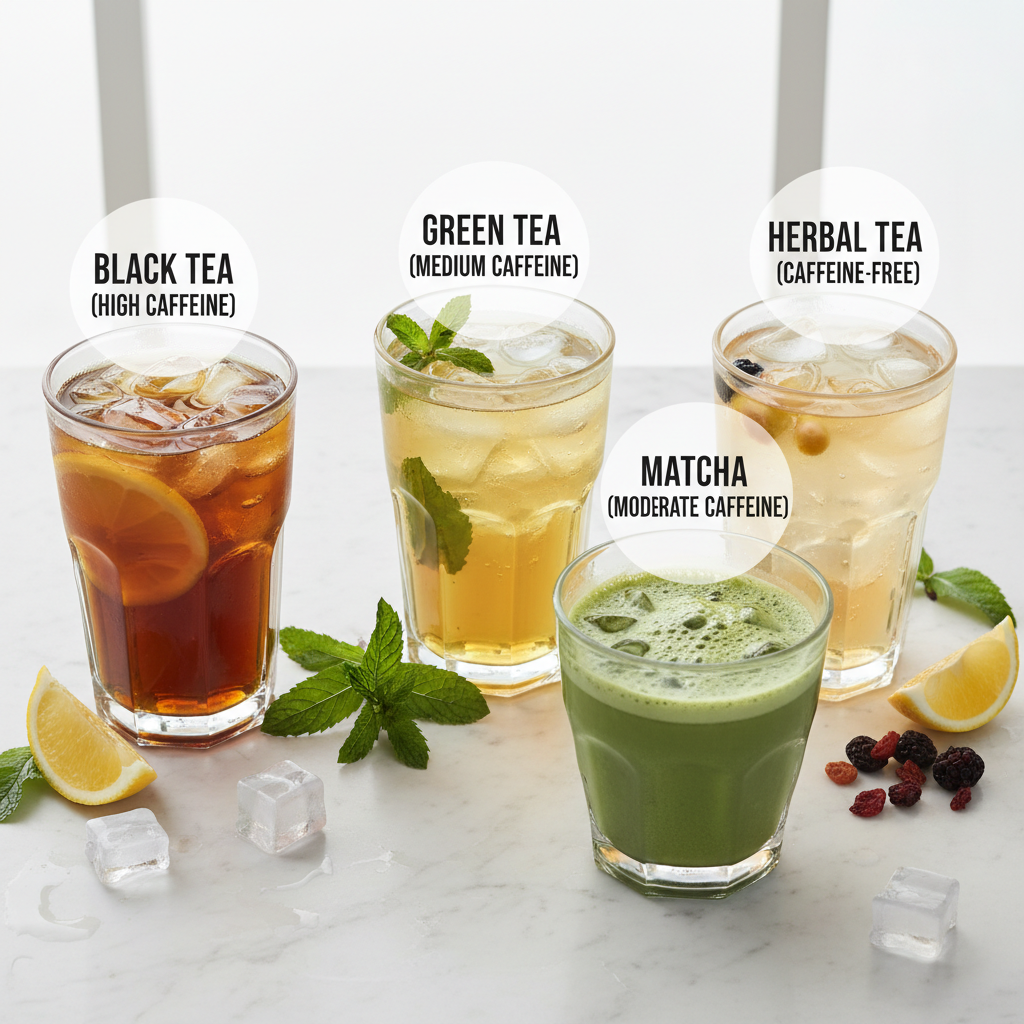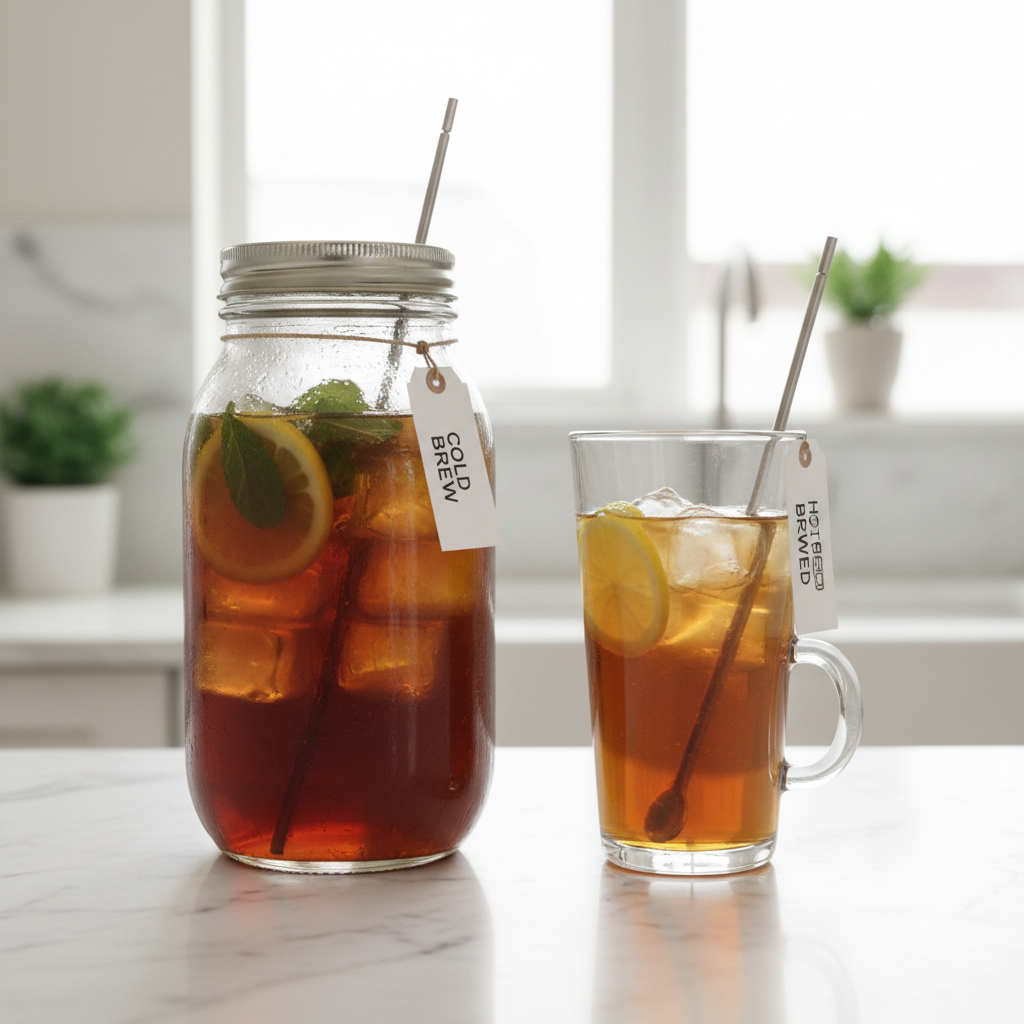
Cold brew tea is forgiving in many ways — you can't really over-steep it the way you can hot tea — but ratios still matter. Too little tea and you get a pale, watery result with no depth. Too much and you get an overpowering concentrate that's unpleasant to drink straight.
The challenge is that different teas require very different ratios. A ratio that works perfectly for black tea will produce a weak, underwhelming result with white tea. Here is a complete guide to cold brew ratios for every major tea type.
Why Cold Brew Ratios Differ from Hot Brew
Cold water extracts compounds from tea much more slowly and selectively than hot water. This has several implications for ratios:
You need more tea. Cold extraction is less efficient than hot extraction, so you generally need 1.5–2x as much tea for cold brew as you would for hot brew.
Steep time compensates for temperature. The long steep time (8–16 hours) allows cold water to extract flavour compounds that would be extracted in minutes with hot water. But it never fully compensates — you still need more tea.
Different compounds extract at different rates. Cold water extracts L-theanine (the calming amino acid) and some flavour compounds readily, but extracts tannins and caffeine more slowly. This is why cold brew tea is often smoother and less bitter than hot-brewed tea — the harsh compounds are less extracted.
Tea type matters enormously. Dense, tightly rolled oolongs extract differently than fluffy white tea. Robust black tea extracts differently than delicate green tea. There is no universal ratio.
The Ratios: By Tea Type
All ratios are given per 1 litre of cold filtered water. Steep times are for refrigerator cold brew (approximately 4°C). Room temperature cold brew extracts faster — reduce steep time by 2–4 hours.
Black Tea
Black tea is the most robust category and can handle longer steep times and higher ratios without becoming unpleasant.
Loose leaf: 8–10 grams per litre (approximately 2–2.5 tablespoons) Tea bags: 4–5 standard bags per litre Steep time: 8–12 hours Maximum steep time: 14 hours (beyond this, even black tea can develop off-flavours)
Notes: Assam and other malty black teas extract quickly and can be on the lower end of the ratio. Darjeeling and lighter black teas benefit from the higher end. For sweet tea cold brew, use the higher ratio to ensure the tea flavour comes through after sweetening.
Green Tea
Green tea is more delicate than black tea and requires a lighter touch. Over-extraction produces bitterness and astringency.
Loose leaf: 10–12 grams per litre (approximately 2.5–3 tablespoons) Tea bags: 5–6 standard bags per litre Steep time: 6–10 hours Maximum steep time: 12 hours
Notes: The higher ratio compensates for green tea's lower extraction efficiency. Sencha and other Japanese greens are particularly well-suited to cold brew — the cold extraction emphasises their sweetness and umami while minimising bitterness. Gyokuro cold brew is exceptional but expensive; use 8–10 grams per litre and steep for only 6–8 hours.
White Tea
White tea is the most delicate category and requires the highest ratio to achieve adequate flavour.
Loose leaf: 12–15 grams per litre (approximately 3–4 tablespoons) Tea bags: 6–8 standard bags per litre Steep time: 10–14 hours Maximum steep time: 16 hours
Notes: White tea's delicate flavour can seem underwhelming in cold brew if you use too little. Don't be afraid of the higher ratio — the result should be delicate but present, not watery. Silver needle and white peony both work well; silver needle produces a more refined result.
Oolong Tea
Oolong varies enormously in style — from light, floral greener oolongs to dark, roasted, almost black-tea-like oolongs. Ratios vary accordingly.
Light oolong (Tie Guan Yin, Ali Shan):
- Loose leaf: 10–12 grams per litre
- Steep time: 8–12 hours
Dark oolong (Dong Ding, Da Hong Pao):
- Loose leaf: 8–10 grams per litre
- Steep time: 8–12 hours
Notes: Tightly rolled oolongs (most Taiwanese oolongs) take longer to unfurl and extract. Give them the full steep time. Loosely twisted oolongs extract more quickly.
Pu-erh Tea
Pu-erh is a fermented tea with a distinctive earthy, complex character. Cold brew pu-erh is unusual but excellent.
Loose leaf: 8–10 grams per litre Steep time: 8–10 hours Maximum steep time: 12 hours
Notes: Pu-erh can develop strong, overpowering flavours if over-steeped. Start with the lower ratio and shorter steep time until you know how your specific pu-erh behaves.
Herbal Tea
Herbal teas vary enormously, but most are quite forgiving in cold brew.
Hibiscus: 8–10 grams per litre; 8–12 hours. Hibiscus extracts colour and tartness readily — don't over-steep or it becomes very sour.
Chamomile: 10–12 grams per litre; 8–12 hours. Chamomile cold brew is gentle and floral.
Peppermint: 8–10 grams per litre; 6–8 hours. Mint extracts quickly and can become overwhelming if over-steeped.
Rooibos: 10–12 grams per litre; 10–14 hours. Rooibos is very forgiving and difficult to over-steep.
Ginger (fresh): 20–30 grams sliced fresh ginger per litre; 8–12 hours. Dried ginger is more concentrated — use 8–10 grams.
Lavender: 5–6 grams per litre; 6–8 hours. Lavender is potent — less is more. Over-steeped lavender cold brew tastes like soap.
Adjusting for Taste
The ratios above are starting points. Your preferences, your specific tea, and your water quality will all affect the result. Here is how to adjust:
Too weak: Increase the ratio by 20% or extend the steep time by 2 hours. If the tea still seems weak after adjustment, your water may be too cold (below 4°C) or your tea may be old and stale.
Too strong: Reduce the ratio by 20% or reduce the steep time. You can also dilute the finished cold brew with cold water — start with a 3:1 ratio of cold brew to water and adjust.
Too bitter: Reduce the steep time. Bitterness in cold brew usually indicates over-extraction, not too much tea. Alternatively, try a lower ratio with a longer steep time.
Too astringent: Same as bitterness — reduce steep time. Also check your water quality; hard water can increase astringency.
Flat or lifeless: Your tea may be stale. Cold brew is particularly unforgiving of old tea because the slow extraction can't compensate for degraded flavour compounds. Use fresh tea.
Making a Concentrate
Cold brew concentrate is useful when you want to make a large batch and dilute to taste, or when you want to add cold brew to sparkling water, milk, or cocktails.
Concentrate ratio: Double the standard ratio (e.g., 16–20 grams of black tea per litre instead of 8–10 grams). Steep time: Same as standard cold brew. Dilution: Typically 1:1 with cold water, sparkling water, or milk. Adjust to taste.
Concentrate keeps in the fridge for up to 2 weeks (compared to 5 days for standard cold brew), making it practical for batch preparation.
Measuring Tea Accurately
Weight is more accurate than volume for measuring loose-leaf tea, because different teas have very different densities. A tablespoon of fluffy white tea weighs much less than a tablespoon of tightly rolled oolong.
A basic kitchen scale (accurate to 1 gram) is the most reliable way to measure tea. If you don't have a scale, use the volume measurements as a starting point and adjust based on results.
The Bottom Line
Cold brew ratios are not one-size-fits-all. Black tea needs less than white tea; robust teas need less than delicate teas; longer steep times can partially compensate for lower ratios.
Start with the ratios in this guide, taste the result, and adjust. After a few batches with any given tea, you'll have a reliable ratio that produces consistent results. The goal is a cold brew that's flavourful and satisfying without being overwhelming — and with the right ratio, cold brew is one of the most reliably delicious ways to make iced tea.
Explore Topics
Written by
Steep & Chill
Content creator and writer sharing insights and stories.