The loose leaf vs. tea bags debate is one of the most reliably contentious topics in the tea world. Tea enthusiasts insist that loose leaf is categorically superior; casual drinkers find the whole conversation exhausting and just want a good glass of iced tea.
The truth is more nuanced than either camp admits. Here is an honest comparison that focuses on what actually matters for iced tea specifically.
What Is Actually Different
The Tea Itself
The most important difference between loose leaf and tea bags is often the quality of the tea inside, not the format.
Standard tea bags typically contain "fannings" and "dust" — the small particles and broken pieces left over after higher-grade tea is processed. These particles have a large surface area relative to their volume, which means they brew quickly and strongly, but they also extract more tannins and can produce a harsher, more astringent cup.
Premium tea bags (pyramid bags, silken sachets, whole-leaf bags) contain higher-quality tea — sometimes the same quality as loose leaf. The bag format is a convenience choice, not a quality compromise.
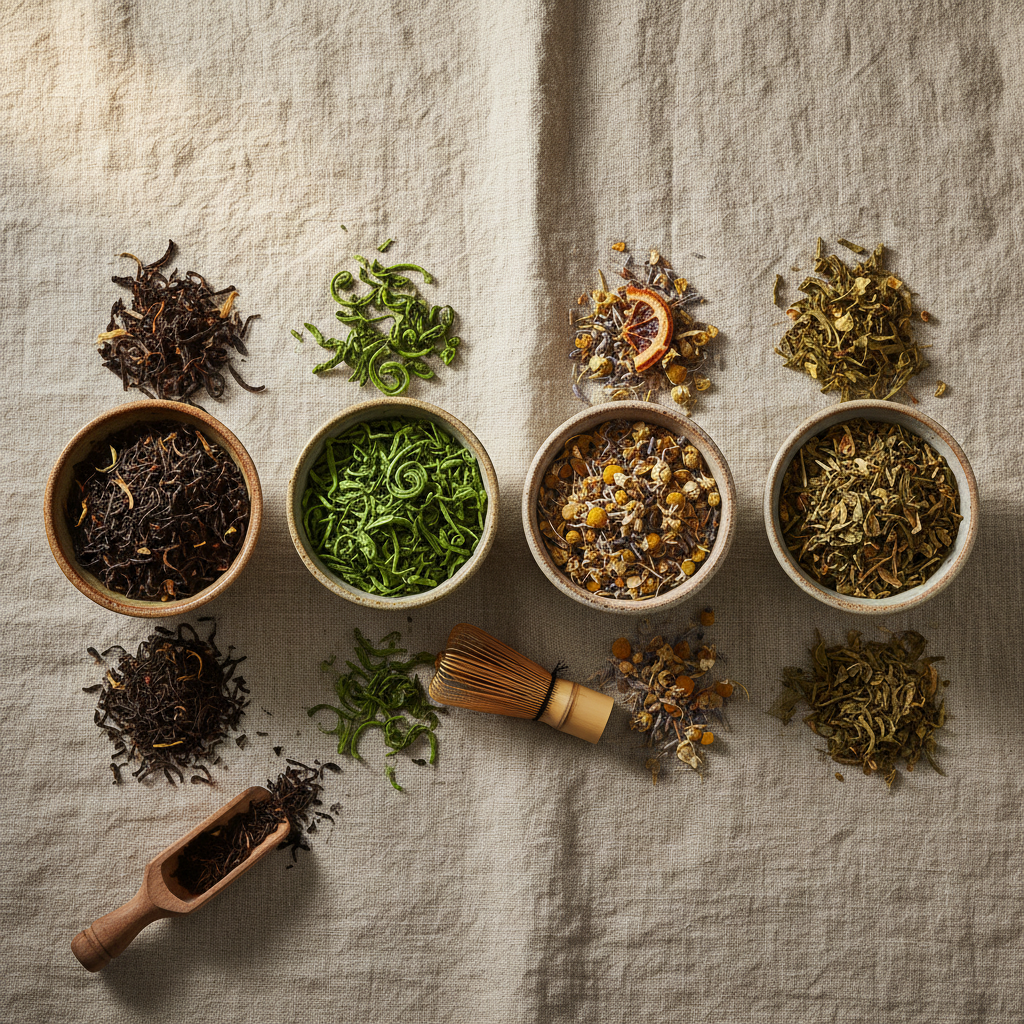
Loose leaf tea ranges from low-quality fannings (yes, you can buy bad loose leaf tea) to exceptional whole-leaf teas that would be impossible to fit in a bag. The format allows for whole leaves, which have more complex flavour and extract more gently.
The key insight: The quality gap between loose leaf and tea bags is largely a quality gap between the tea inside, not an inherent advantage of the format. A premium whole-leaf pyramid bag can produce tea as good as most loose leaf. A cheap loose leaf tea can produce tea worse than a good tea bag.
Extraction Dynamics
The format does affect extraction in meaningful ways.
Tea bags: The small particles in standard tea bags extract very quickly. This is why tea bags are convenient — you get a strong brew in 3–5 minutes. But the rapid extraction also means more tannins and a higher risk of bitterness if you over-steep.
Loose leaf: Whole leaves extract more slowly and gently. This gives you more control over the brewing process and generally produces a more nuanced flavour. It also means loose leaf is more forgiving — a few extra minutes of steeping won't ruin it the way it can with tea bags.
For cold brew: This difference is less significant. Cold brew extracts slowly regardless of format, and the long steep time (8–12 hours) allows even whole leaves to fully extract. Both formats work well for cold brew.
Flavour
In a direct comparison using equivalent quality teas, loose leaf generally produces a more complex, nuanced flavour. The whole leaves contain more volatile aromatic compounds that contribute to flavour and aroma.
However, the difference is most noticeable in delicate teas — white tea, light green tea, high-quality oolong. For robust black tea (the most common iced tea base), the difference between a good tea bag and good loose leaf is smaller and may not be worth the extra effort for everyday use.
For iced tea specifically: The flavour difference between loose leaf and good tea bags is often masked by ice, sweetener, and other additions. A matcha lemonade or hibiscus sweet tea made with tea bags will taste essentially the same as one made with loose leaf of equivalent quality.
The Practical Comparison
Convenience
Tea bags win decisively. Drop a bag in water, steep, remove. No measuring, no strainer, no cleanup beyond disposing of the bag.
Loose leaf requires measuring, an infuser or strainer, and cleanup. For a single glass, this is a minor inconvenience. For a large batch of sweet tea, it's more significant.
For iced tea specifically: Most iced tea is made in large batches (1–2 litres at a time). At this scale, the convenience gap narrows — you're measuring once and steeping once regardless of format.
Cost
Tea bags are generally cheaper per cup for equivalent quality. The processing and packaging costs are lower, and the format is more efficient for mass production.
Loose leaf can be more economical at the premium end — a high-quality loose leaf tea often costs less per cup than premium pyramid bags of equivalent quality, because you're not paying for the bag.
For everyday iced tea: Standard tea bags (Luzianne, Lipton, Red Rose) are very inexpensive and produce perfectly good sweet tea and black iced tea. Loose leaf is not more economical at this level.
Sustainability
Loose leaf is generally more sustainable. No packaging waste beyond the tin or bag the tea comes in. No individual wrappers, no staples, no strings.
Tea bags generate more waste, particularly individually wrapped bags. Some tea bags contain plastic (polypropylene) that doesn't biodegrade. Look for bags labelled "plastic-free" or "compostable" if sustainability matters to you.
Pyramid bags often contain more plastic than flat bags — the mesh is frequently made from nylon or PET. If you care about plastic-free tea, flat paper bags or loose leaf are better choices.
Consistency
Tea bags produce more consistent results because the tea is pre-measured. Every bag produces approximately the same amount of tea.
Loose leaf requires measuring, and small variations in the amount used can affect the result. This is a minor issue for experienced brewers but can be frustrating for beginners.
Which to Use for Different Iced Tea Styles
Classic Sweet Tea
Tea bags are the traditional and practical choice. Luzianne family-size bags are specifically designed for iced tea and produce excellent results. Loose leaf is not necessary here — the strong, straightforward flavour of sweet tea doesn't benefit significantly from the nuance of whole-leaf tea.
Recommendation: Good quality tea bags (Luzianne, Tetley, Red Rose).
Cold Brew Iced Tea
Both work well. Cold brew is forgiving of format because the long steep time allows full extraction regardless of leaf size. Loose leaf gives you more variety (you can cold brew any tea, including unusual oolongs and whites that aren't available in bags), but good tea bags produce excellent cold brew.
Recommendation: Loose leaf for variety and quality; tea bags for convenience.
Green Tea Iced Tea
Loose leaf is worth it here. Good Japanese green tea — sencha, gyokuro, genmaicha — is significantly better in loose leaf form. The flavour difference is more noticeable in green tea than in black tea, and the delicate flavours of quality green tea are worth preserving.
Recommendation: Loose leaf for quality green teas; tea bags for everyday use.
Matcha
Matcha is always loose — it's a powder, not leaves. The loose vs. bags debate doesn't apply.
Herbal Tea
Tea bags are fine for most herbal teas. Chamomile, peppermint, hibiscus, and rooibos are widely available in good quality bags. Loose leaf gives you access to more unusual herbs and blends, but the quality difference is less pronounced than with true teas.
Recommendation: Tea bags for common herbs; loose leaf for unusual blends or when you want to create your own combinations.
Making the Switch to Loose Leaf
If you want to try loose leaf tea for iced tea, here is what you need:
A kitchen scale: Weight is more accurate than volume for measuring loose leaf tea. A basic digital scale accurate to 1 gram is sufficient.
An infuser or strainer: Options include mesh infuser balls, basket infusers that sit in your pitcher, or simply steeping the leaves loose and straining through a fine-mesh sieve.
A good source: Specialty tea shops, Asian grocery stores, and online retailers carry a much wider range of loose leaf teas than supermarkets. David's Tea, Teavana (online), and various Japanese tea importers are good Canadian sources.
The Bottom Line
Loose leaf tea is often better than tea bags — but not always, and not by as much as tea enthusiasts suggest. The quality of the tea inside matters more than the format.
For everyday sweet tea and black iced tea, good quality tea bags are perfectly fine and significantly more convenient. For green tea, white tea, and premium oolongs, loose leaf is worth the extra effort. For cold brew, both work well.
The best approach is to use good quality tea in whatever format is most convenient for how you make iced tea. Don't let format snobbery get in the way of a good glass of tea.
Explore Topics
Written by
Steep & Chill
Content creator and writer sharing insights and stories.