Of all the health claims made about herbal teas, hibiscus is one of the few backed by genuine clinical evidence. Multiple randomized controlled trials — the gold standard of medical research — have found that regular hibiscus tea consumption can meaningfully lower blood pressure in people with hypertension or pre-hypertension.
This is not folk medicine. This is peer-reviewed science. Here is what the research actually shows, what the caveats are, and how to make the most effective iced hibiscus tea at home.
The Science: What Clinical Trials Found
The Key Studies
Tufts University (2010): A randomized, double-blind, placebo-controlled trial published in the Journal of Nutrition found that adults with pre-hypertension or mild hypertension who drank three cups of hibiscus tea daily for six weeks experienced a 7.2 mmHg reduction in systolic blood pressure compared to the placebo group. Participants with the highest baseline blood pressure saw the greatest reductions.
AHA Scientific Sessions (2008): A study presented at the American Heart Association's annual meeting found that hibiscus tea drinkers experienced a 13.2% reduction in systolic blood pressure — comparable to some first-line antihypertensive medications.
Iranian meta-analysis (2015): A systematic review of five randomized controlled trials concluded that hibiscus tea supplementation significantly reduced both systolic and diastolic blood pressure, with the greatest effect in people with elevated baseline readings.
Why Does It Work?
Hibiscus (Hibiscus sabdariffa) contains several bioactive compounds that appear to act on blood pressure through multiple mechanisms:
Anthocyanins — the pigments that give hibiscus its deep ruby colour — have demonstrated ACE-inhibitory activity in laboratory studies. ACE (angiotensin-converting enzyme) inhibitors are a major class of blood pressure medications; hibiscus appears to work through a similar pathway.
Hibiscus acid and hydroxycitric acid may contribute to vasodilation — the relaxation of blood vessel walls that reduces resistance and lowers pressure.
Diuretic effect — hibiscus has mild diuretic properties, which can reduce blood volume and thereby lower pressure.
Important Caveats
Before you replace your medication with iced tea, some critical context:
It is not a substitute for prescribed medication. If you are on antihypertensive drugs, do not stop taking them. Hibiscus tea may complement medical treatment but has not been tested as a replacement.
Drug interactions exist. Hibiscus may interact with hydrochlorothiazide (a common diuretic) and potentially with other antihypertensive medications. If you take blood pressure medication, speak with your doctor before adding hibiscus tea regularly.
The effect is dose-dependent. The studies showing significant results used the equivalent of 2–3 cups of strongly brewed hibiscus tea per day. A weak cup once a week is unlikely to produce measurable effects.
Results vary. People with higher baseline blood pressure tend to see larger reductions. Those with normal blood pressure may see minimal change.
The Optimal Dose and Preparation
Based on the clinical literature, the most effective protocol appears to be:
- 2–3 cups per day of strongly brewed hibiscus tea
- Steep time: 10–15 minutes (longer than most teas — hibiscus needs time to release its anthocyanins)
- Amount: 1.5–2 grams of dried hibiscus per cup (roughly 1 heaped tablespoon of dried calyces)
- Consistency: Daily consumption for at least 4–6 weeks to see measurable effects
The Best Iced Hibiscus Tea Recipe for Blood Pressure
This recipe is designed to maximize anthocyanin extraction while keeping the drink pleasant to consume daily.
Ingredients (makes 1 litre / ~4 cups)
- 4 tbsp dried hibiscus calyces (not hibiscus powder — whole or coarsely chopped calyces)
- 1 litre filtered water
- 1 cinnamon stick
- 3 whole cloves
- 1 tbsp raw honey or monk fruit sweetener (optional)
- Juice of ½ lime
- Ice to serve
Method
-
Bring water to a boil, then remove from heat and let it cool for 2 minutes (about 95°C / 203°F). Boiling water is fine for hibiscus — unlike green tea, it won't turn bitter.
-
Add hibiscus, cinnamon, and cloves. Steep for 12–15 minutes. The longer steep extracts more anthocyanins and produces a deeper, more potent brew.
-
Strain through a fine mesh sieve into a pitcher. Press the hibiscus gently to extract all the liquid.
-
Stir in sweetener (if using) while still warm so it dissolves fully. Add lime juice.
-
Cool to room temperature, then refrigerate until cold — at least 2 hours.
-
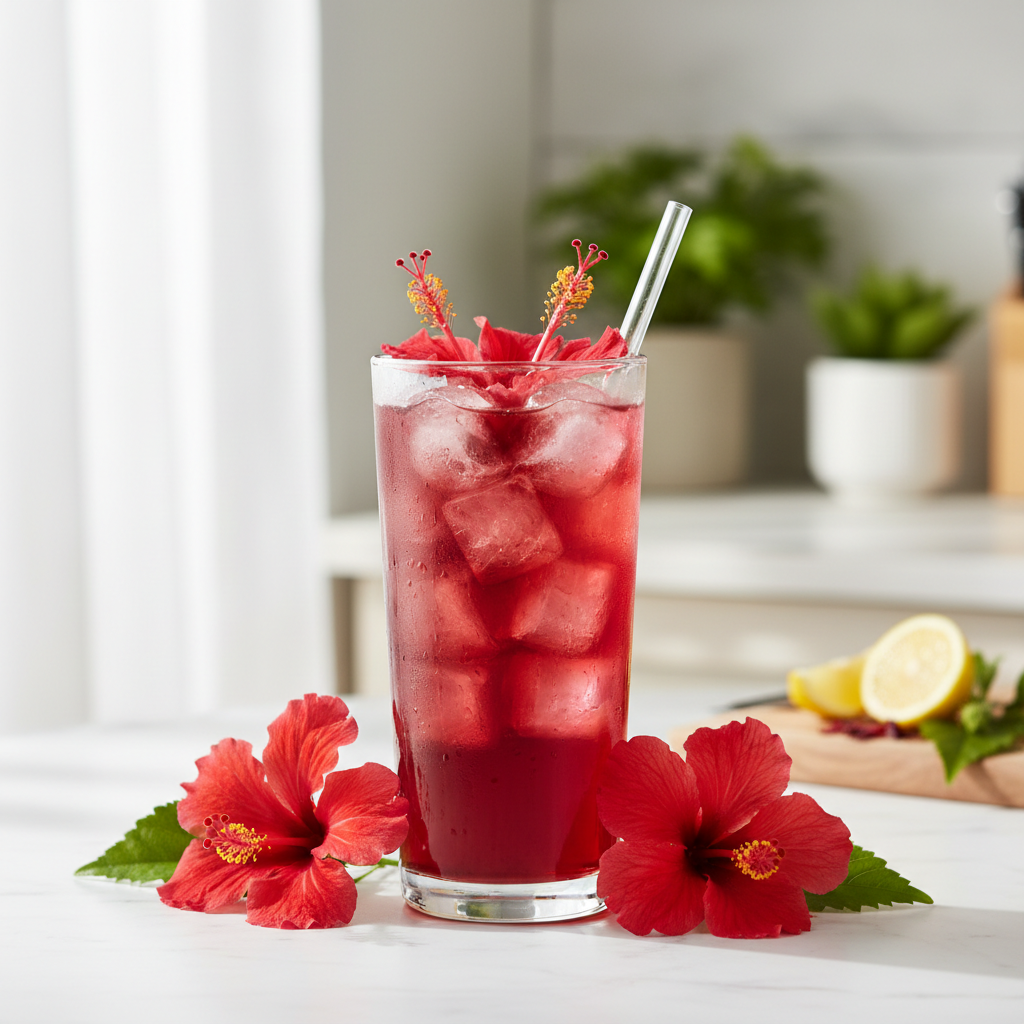
Serve over ice. The colour should be a deep, jewel-like ruby. If it looks pale pink, you need more hibiscus or a longer steep.
Storage
Keeps refrigerated for up to 5 days. The anthocyanin content remains stable when cold.
Enhancing the Recipe
For a stronger functional effect: Increase hibiscus to 5–6 tbsp per litre and steep for the full 15 minutes.
For a gentler flavour: Add a few slices of fresh ginger and a strip of orange peel during steeping. The citrus oils soften hibiscus's tartness.
Cold brew version: Combine hibiscus and cold water in a jar, refrigerate for 12–24 hours. Cold brewing produces a slightly less tart, more floral flavour — though some research suggests hot extraction yields higher anthocyanin concentrations.
The Bottom Line
Hibiscus iced tea is one of the most evidence-backed functional beverages available. The research is consistent: regular consumption of 2–3 cups daily can produce clinically meaningful reductions in blood pressure, particularly in people with elevated readings.
It is not magic, and it is not medicine. But as part of a heart-healthy lifestyle — alongside a balanced diet, regular exercise, and appropriate medical care — a daily pitcher of iced hibiscus tea is one of the most delicious things you can do for your cardiovascular health.
Always consult your healthcare provider before making significant changes to your diet, especially if you are managing a medical condition or taking prescription medications.
Explore Topics
Written by
Steep & Chill
Content creator and writer sharing insights and stories.